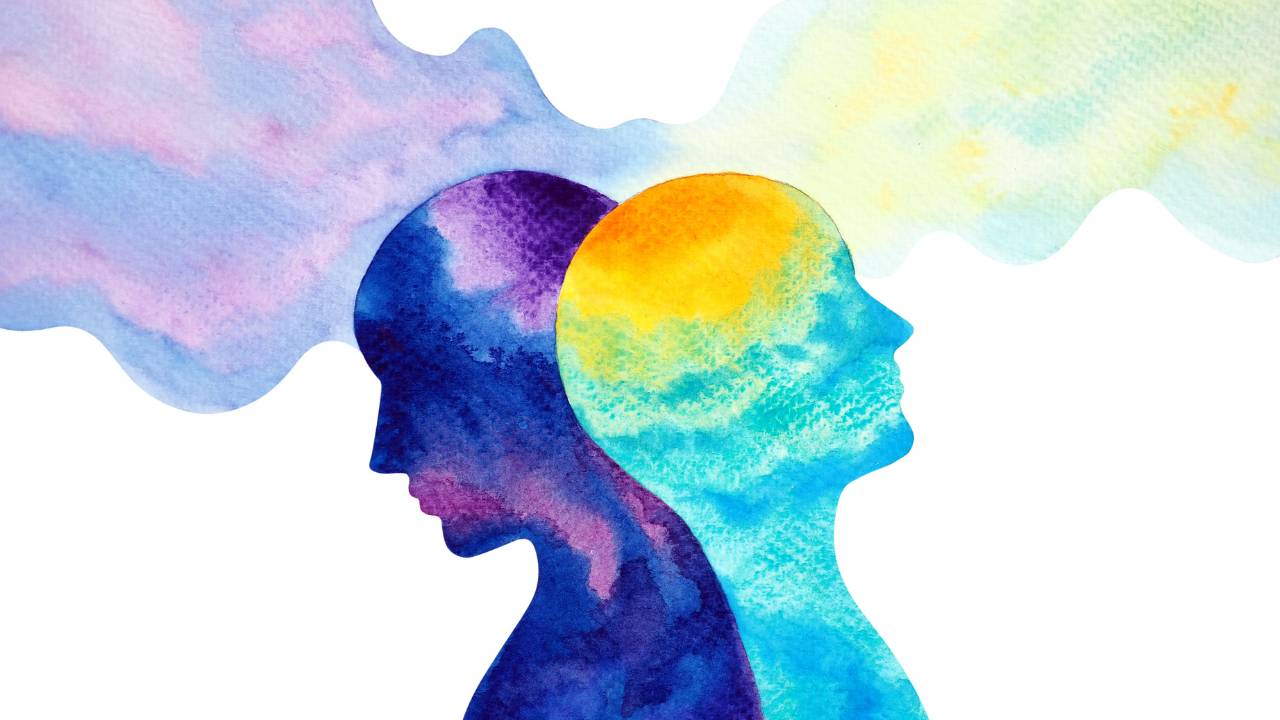
The Curious Case of the Human Mind
It’s curious, isn’t it?
How the same mind that builds a world of cities, laws, and technologies can also build walls that keep us from truly knowing ourselves.
We call it life.
We wake up, go to work, chase meaning, manage responsibilities, make plans, and somewhere in the midst of all that motion, we forget that most of what we live inside of… was made up.
The economy, politics, religion, money, law, justice, success.. They are all ideas, agreements of the mind.
Powerful? Yes.
Necessary? Maybe.
But still, creations.
We live within the architecture of our own imagination, and over time, mistake it for truth.
We forget that we were the ones who drew the lines on the map,
Who named the colors,
Who decided what mattered and what didn’t.
And now, we fight to protect what we’ve created,
As if these ideas were nature itself.
Living in the Dream of Thought
The mind is a master builder.
It invents systems, markets, governments…
then convinces us they are the way things must be.
We live in invisible cages made of ideas,
believing freedom lies somewhere outside,
when in truth, it’s the awareness within that frees us.
I often think about how easily we slip into survival mode.
Even when our lives are comfortable, our minds remain alert, looking for danger, comparison, validation.
It’s ancient wiring in a modern body.
And so we strive and struggle, not always because we need to, but because our nervous system doesn’t know how to rest.
We call it ambition.
We call it discipline.
Sometimes it’s fear wearing noble clothes.
The Great Distraction
The mind has an endless appetite for the external.
It wants to measure, to compare, to prove.
We pour our creative power into shaping the world around us, but rarely pause to cultivate the world within us.
We’ve learned to harness electricity, but not attention.
We can send satellites across galaxies, but can’t sit still for five minutes without checking our phones.
We obsess over what we can’t control.. The market, politics, what others think.. And neglect what we can: our breath, our presence, our response.
It’s ironic.
We’ve developed intellect to such precision, but somewhere along the way, we’ve neglected wisdom.
We analyze endlessly, but seldom understand.
We’ve mistaken information for insight.
Noise for knowing.
The Collective Mirror
Sometimes I look at humanity and see a reflection of the human mind… divided, restless, always in pursuit.
We are united by sports, music, and art… places where the mind briefly dissolves into shared experience.
Yet we fracture over politics, belief, identity… the very inventions that were meant to bring us order.
It’s as if we’re all living inside one enormous shared mind, and each of us is both the thinker and the thought.
Our collective consciousness mirrors our individual one: when we are fragmented inside, the world appears fragmented outside.
When we are fearful, the world feels unsafe.
When we are grounded, clarity returns.
The Forgotten Practice
Rarely do we pause to ask:
What is this thing we call the mind?
What is this force that narrates, divides, imagines, and believes?
We study almost everything except the one thing that shapes it all.
We believe the next innovation, reform, or election will change the world, but perhaps the real frontier is invisible.
It’s not out there, but here… in the space between thought and awareness, between stimulus and choice.
That’s where freedom lives.
That’s where peace begins.
When we turn inward, not to escape the world, but to understand the instrument through which we perceive it, we begin to see differently.
We stop reacting to every passing storm and start sensing the sky behind it.
The Quiet Revolution
Maybe the evolution we’re waiting for isn’t technological or political, maybe it’s psychological.
That collective moment when more of us choose to look inward, to see how our perceptions create our world, to take responsibility for the stories we live by.
We might still play the game of economy and politics and religion, but with the awareness that they are games, not prisons.
We can engage without being consumed.
We can build without losing ourselves.
That’s the invitation… not to reject the human mind, but to befriend it.
To see its brilliance, its fear, its power, and to use it consciously.
Because when the mind serves awareness, it becomes a tool for peace.
But when awareness serves the mind, we become servants of our own creation.
The curious case of the human mind is not that it dreams, it’s that it forgets that it’s dreaming.
And yet, the moment we remember, everything softens.
We begin to live, not as thinkers lost in thought, not as people in survival mode, but as beings aware of the miracle of thinking itself.
That awareness is freedom.
That freedom is love.
And that love… is the true intelligence we’ve been searching for all along.
Author